

Products › Installation Products › PERCUSSION DRIVEN ANCHORS
Falcon Anchor Systems
High-performance, US-manufactured ground anchoring and stabilization solutions

Falcon Anchoring Systems (now part of MKB) delivers advanced, reliable anchoring technology designed to grip, dig, and protect across a wide range of civil, solar, agricultural, and recreational applications. Engineered for durability and ease of installation, our products provide immediate, cost-effective stabilization, ensuring your project remains secure from day one.
The Falcon advantage
Whether you are stabilizing a steep slope, securing a solar array, or protecting sensitive vegetation, Falcon systems are built to perform in the most demanding geotechnical conditions.
Immediate Load-Locking
Our Percussion Driven Anchors (PDAs) are designed for quick engagement, allowing you to secure slopes or structures faster than ever.
Engineered Reliability
From tapered anchor heads that penetrate without deflection to heavy-duty cable and end pieces, every component is cast and assembled in the USA.
Labor & Time Savings
Falcon systems eliminate the need for complex machinery and crimping, significantly reducing installation time and site disturbance.
Typical applications
Falcon Percussion Driven Anchors (PDAs) are deep-seated anchors embedded under potential failure planes to harness soil strength, providing superior pullout resistance in saturated or unstable surficial soils. They are ideal for slope stabilization and erosion control, solar racking system ground mounts, and securing public equipment such as benches and tables against theft and vandalism.
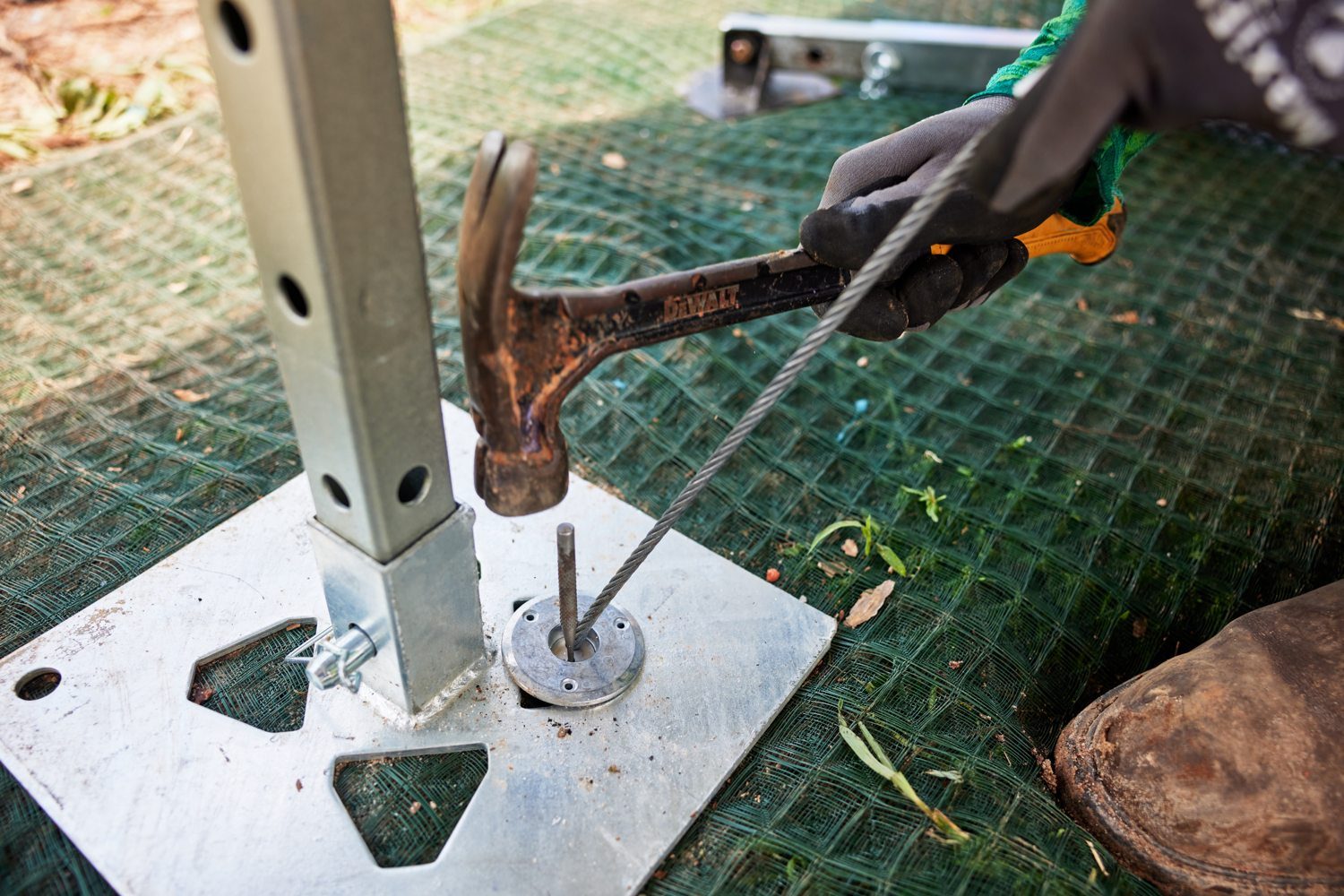
Integrated armoring: the ARVS system. When paired with High-Performance Turf Reinforcement Mats (HPTRMs), Falcon Anchors create an Anchor Reinforced Vegetated System (ARVS). This combines the durability of mechanical anchoring with the long-term stabilization provided by established vegetation, creating a self-sustaining armor for the earth’s surface.
In the field
Installation
Product gallery
Product details
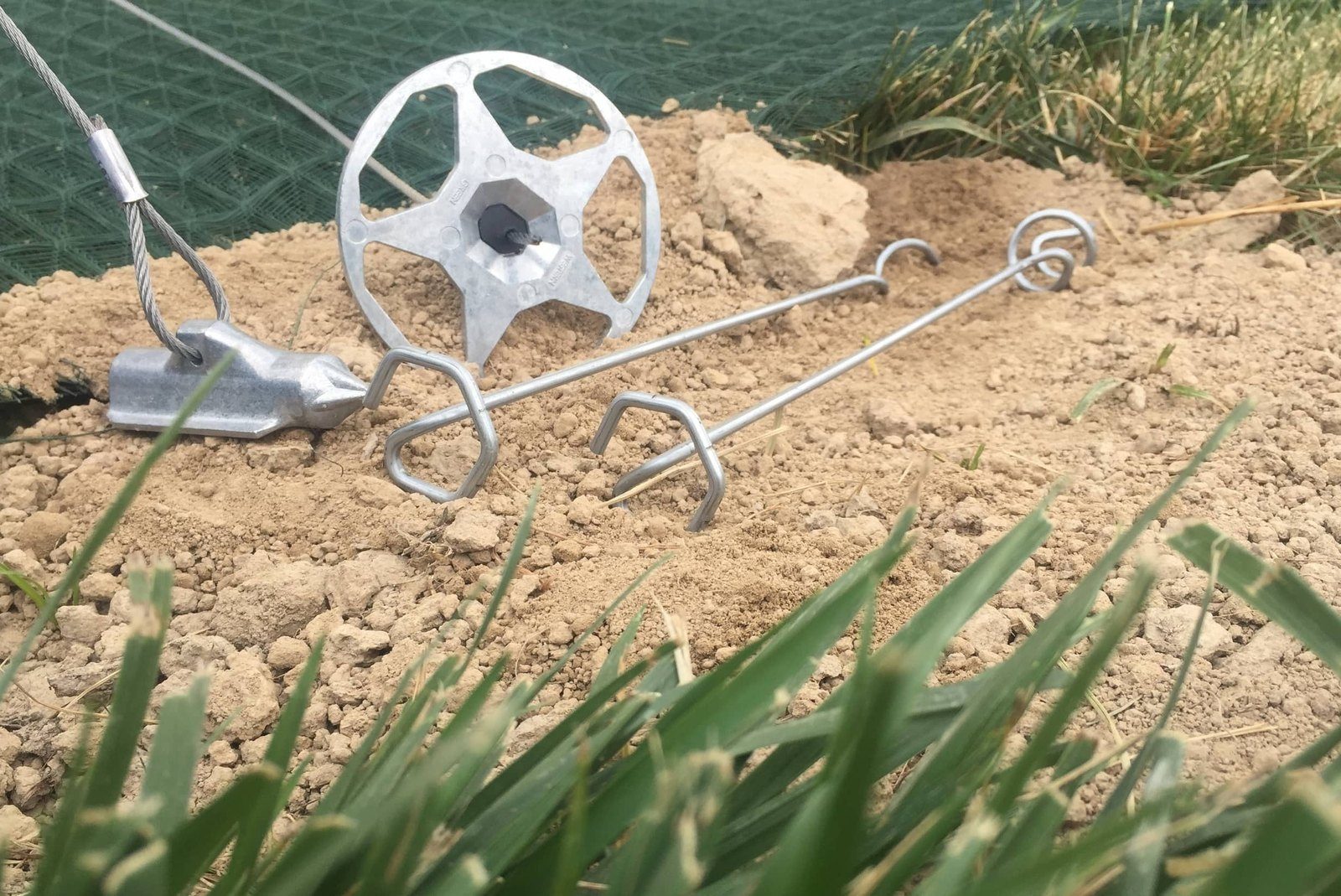
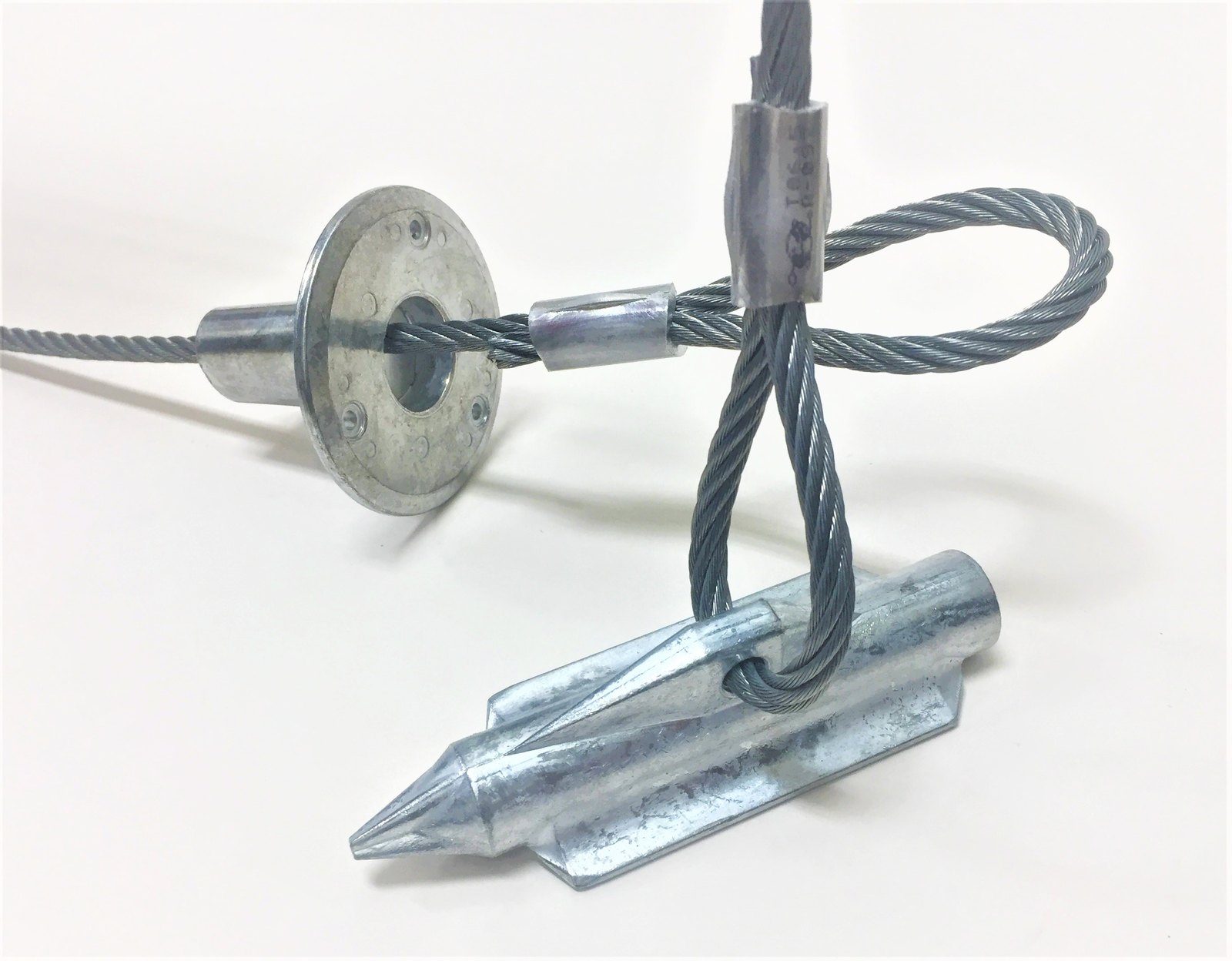
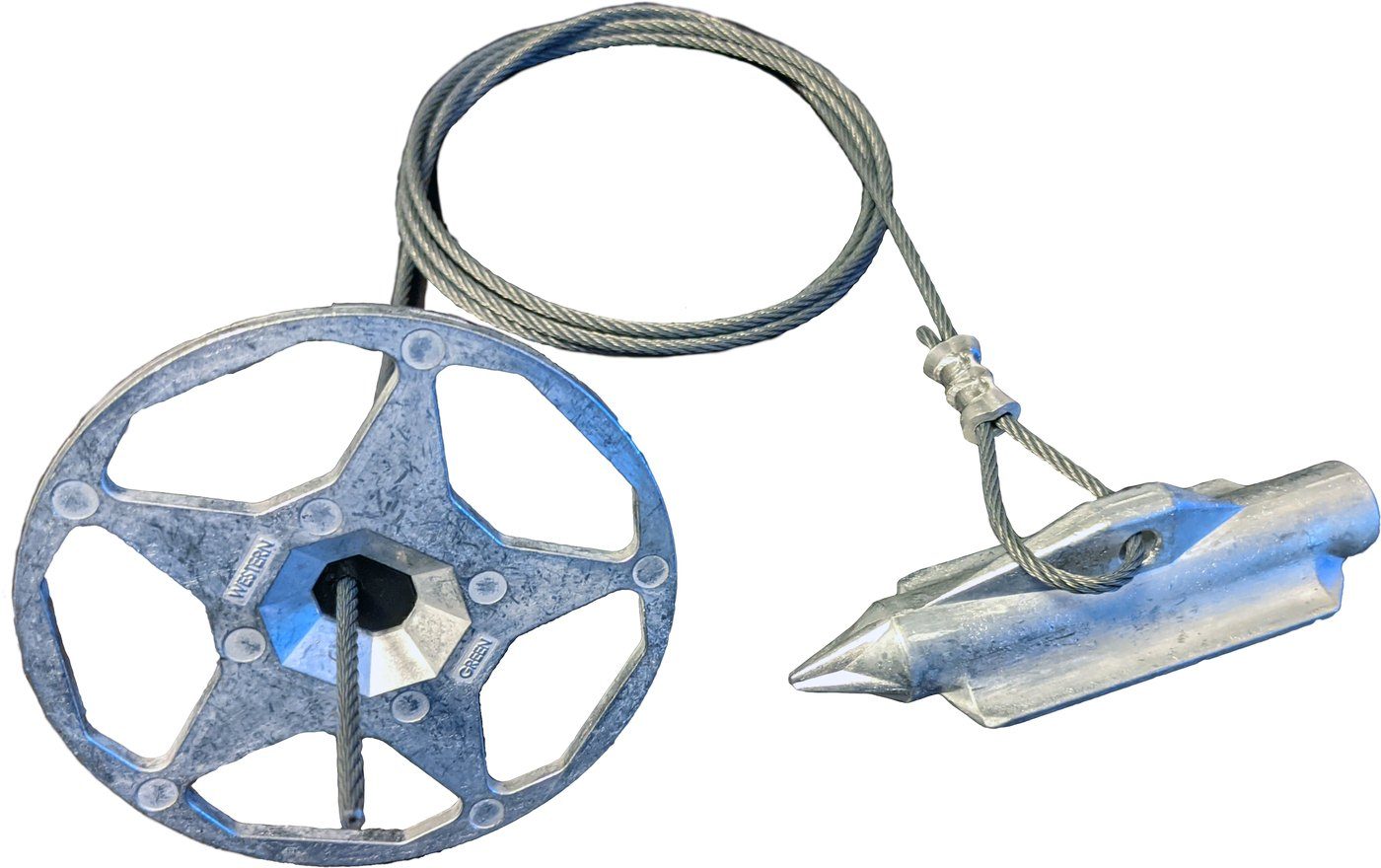
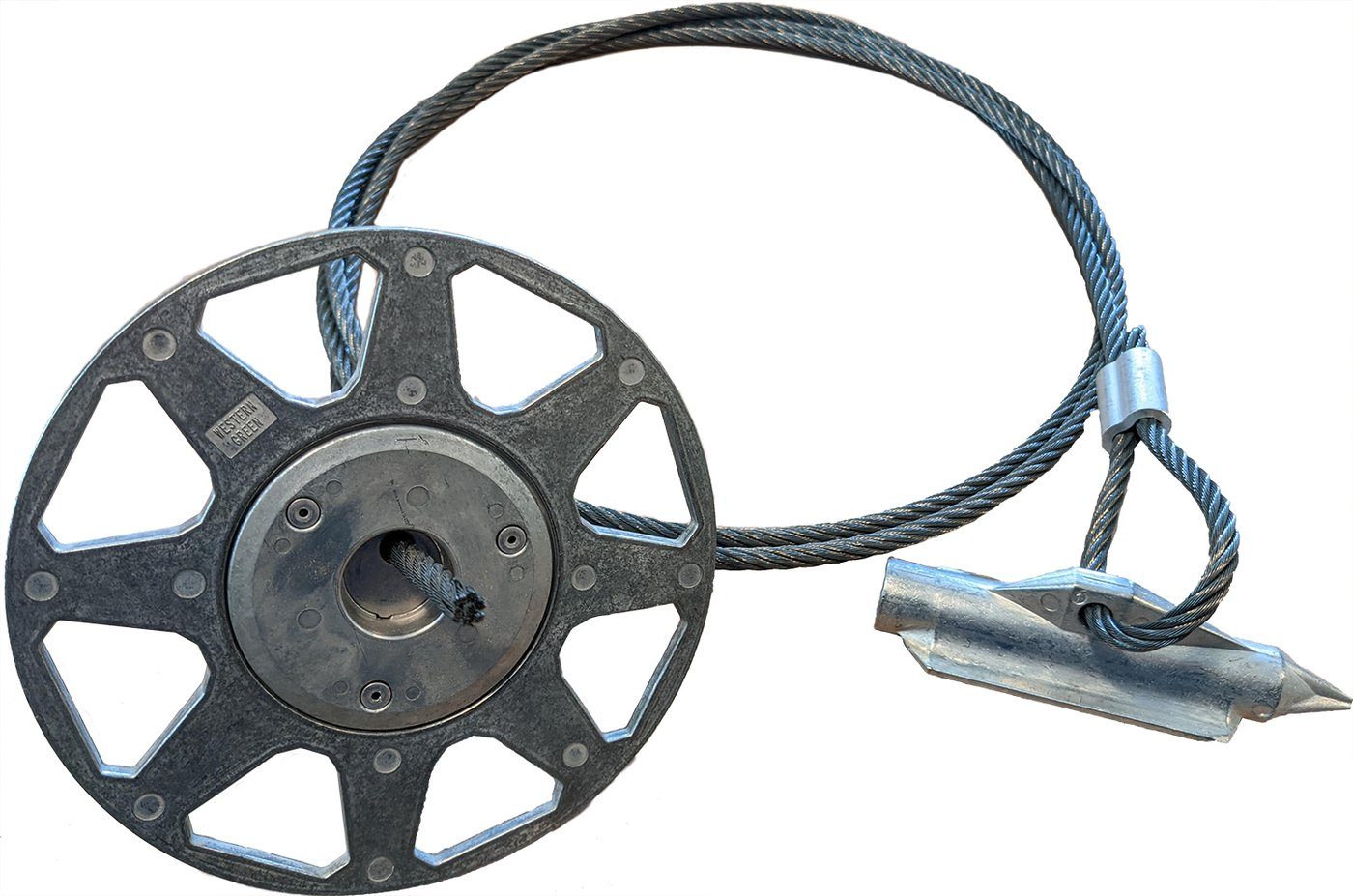
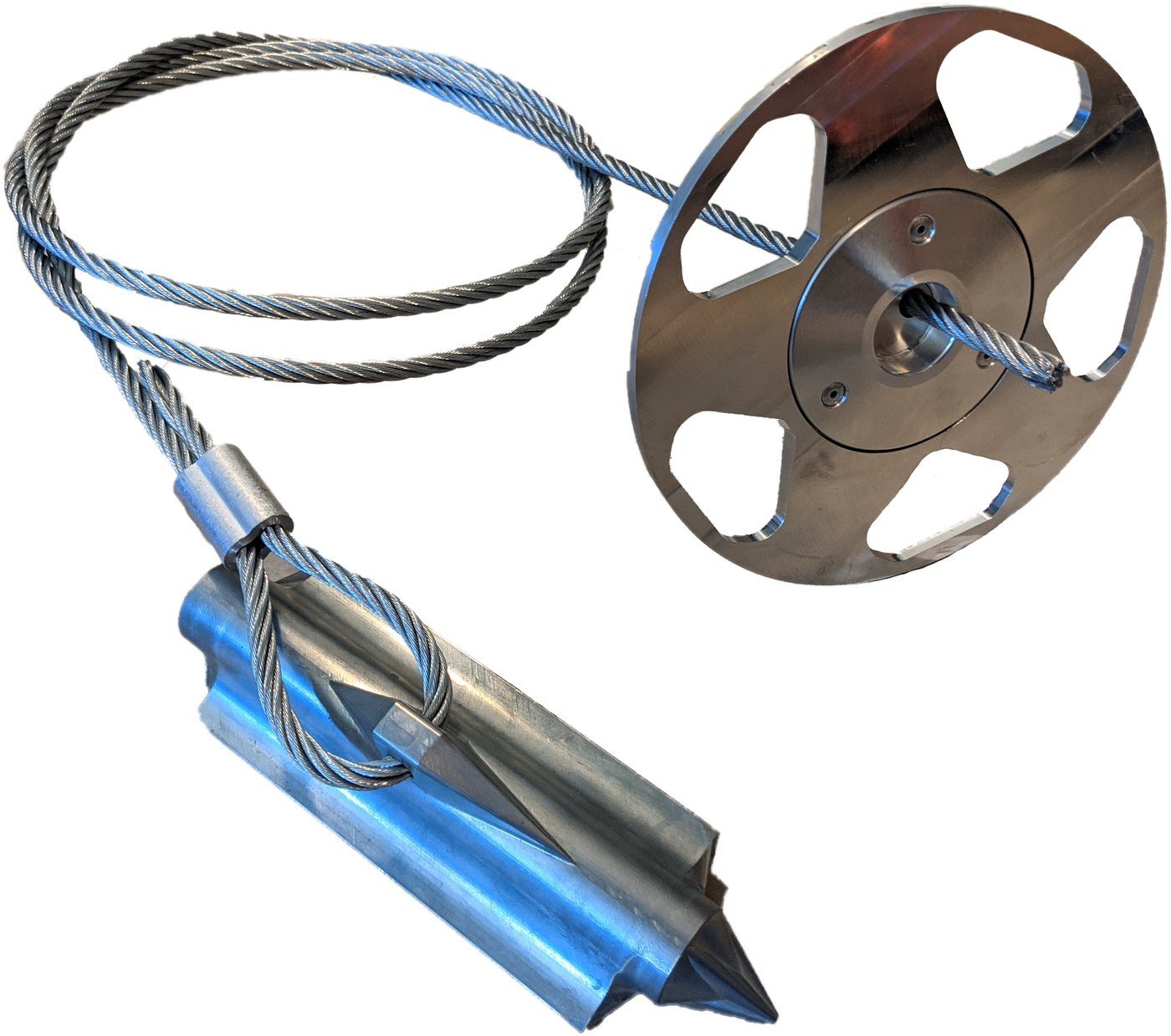
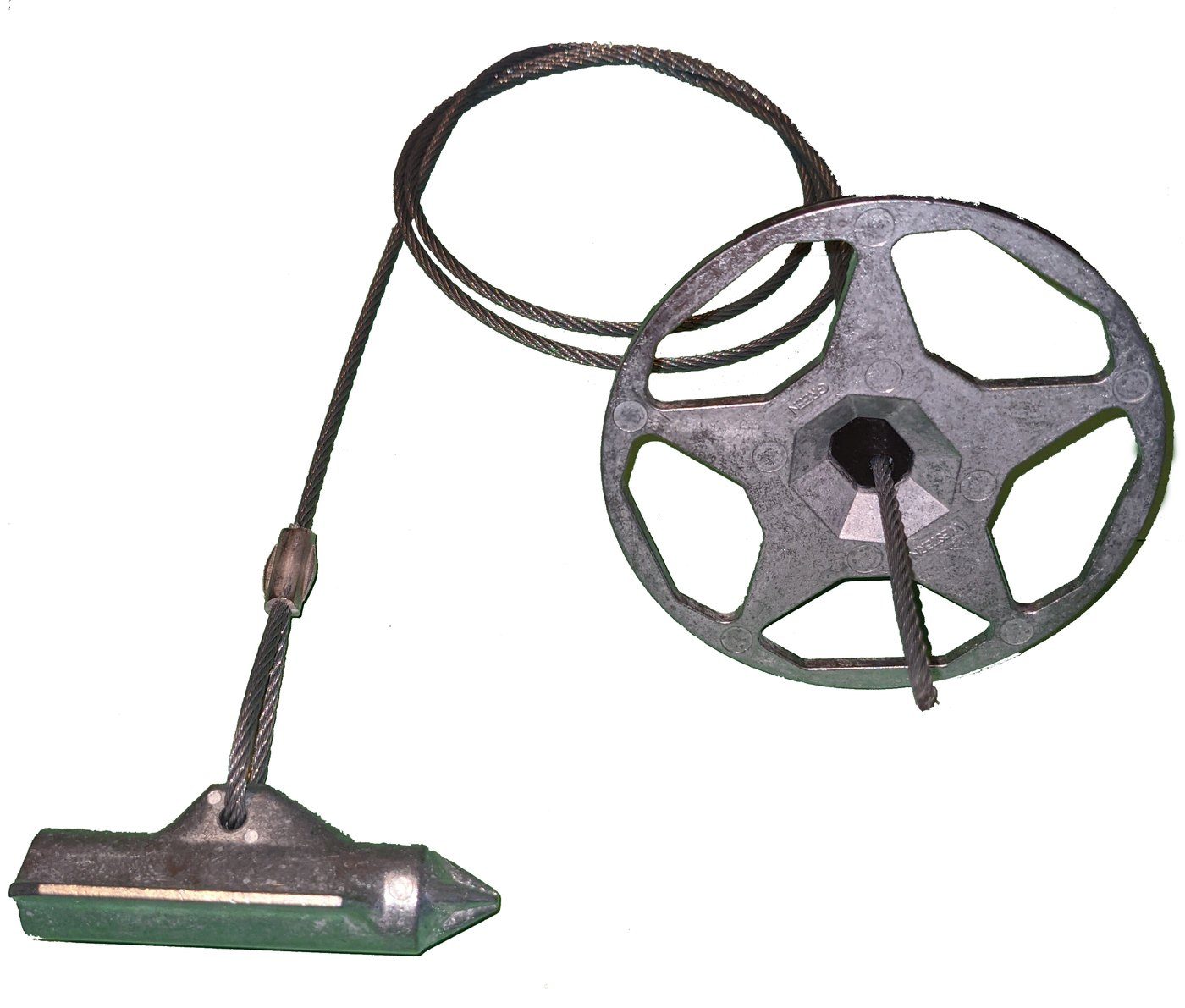
Assembly components. Anchor assemblies consist of four primary components.
Anchor. The anchor is the component driven into the soil that develops resistance to pullout. The size, shape, soil type, soil conditions, and drive depth affect the pullout resistance of the anchor.
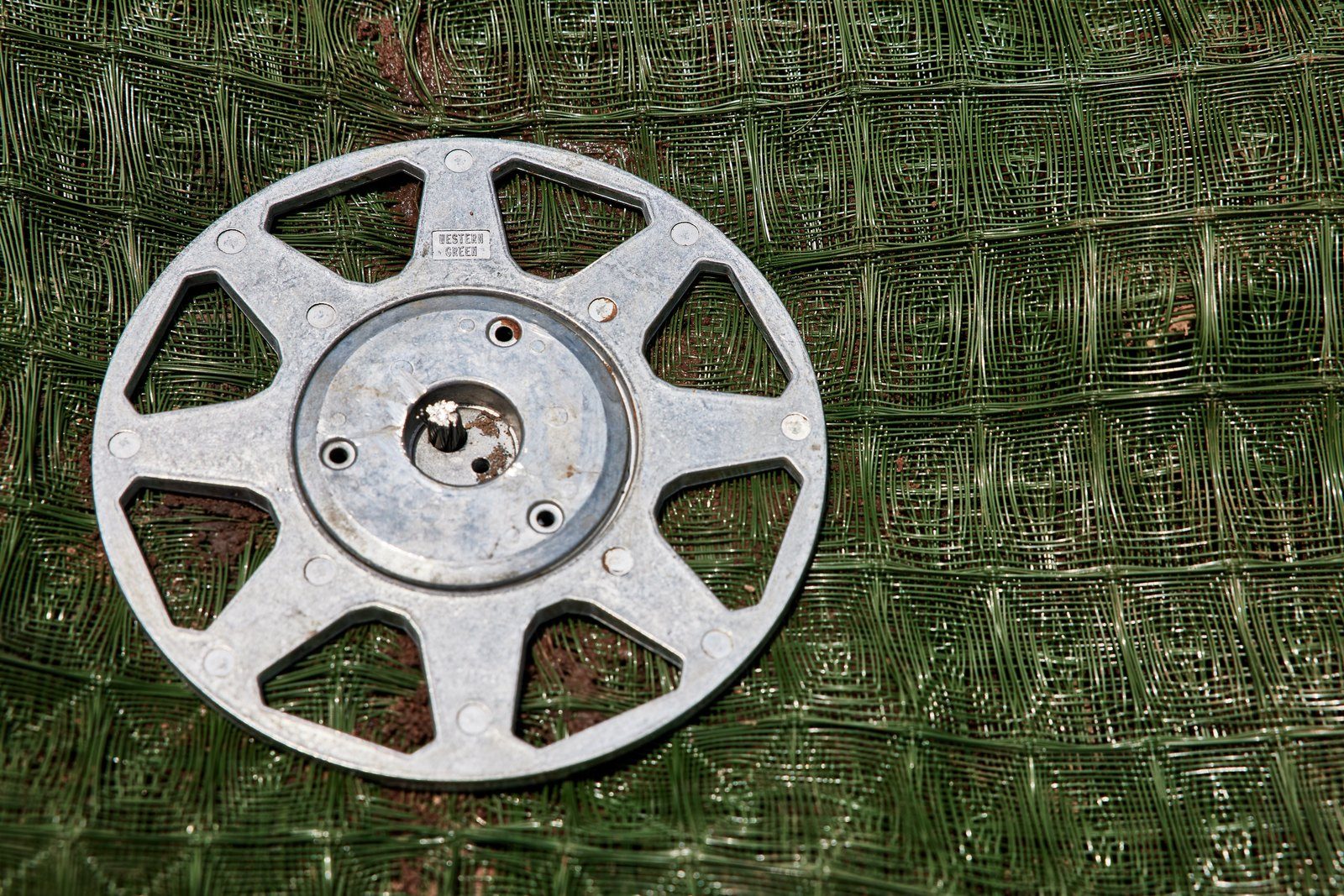
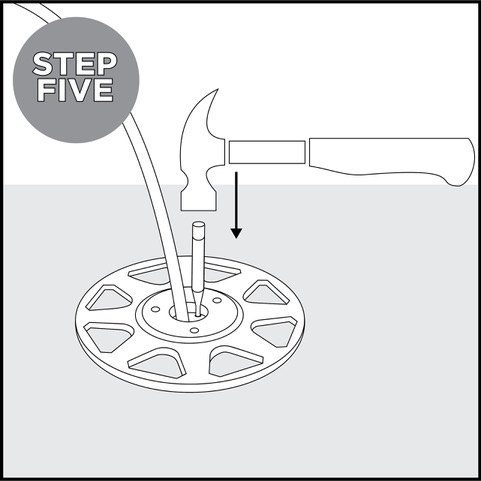
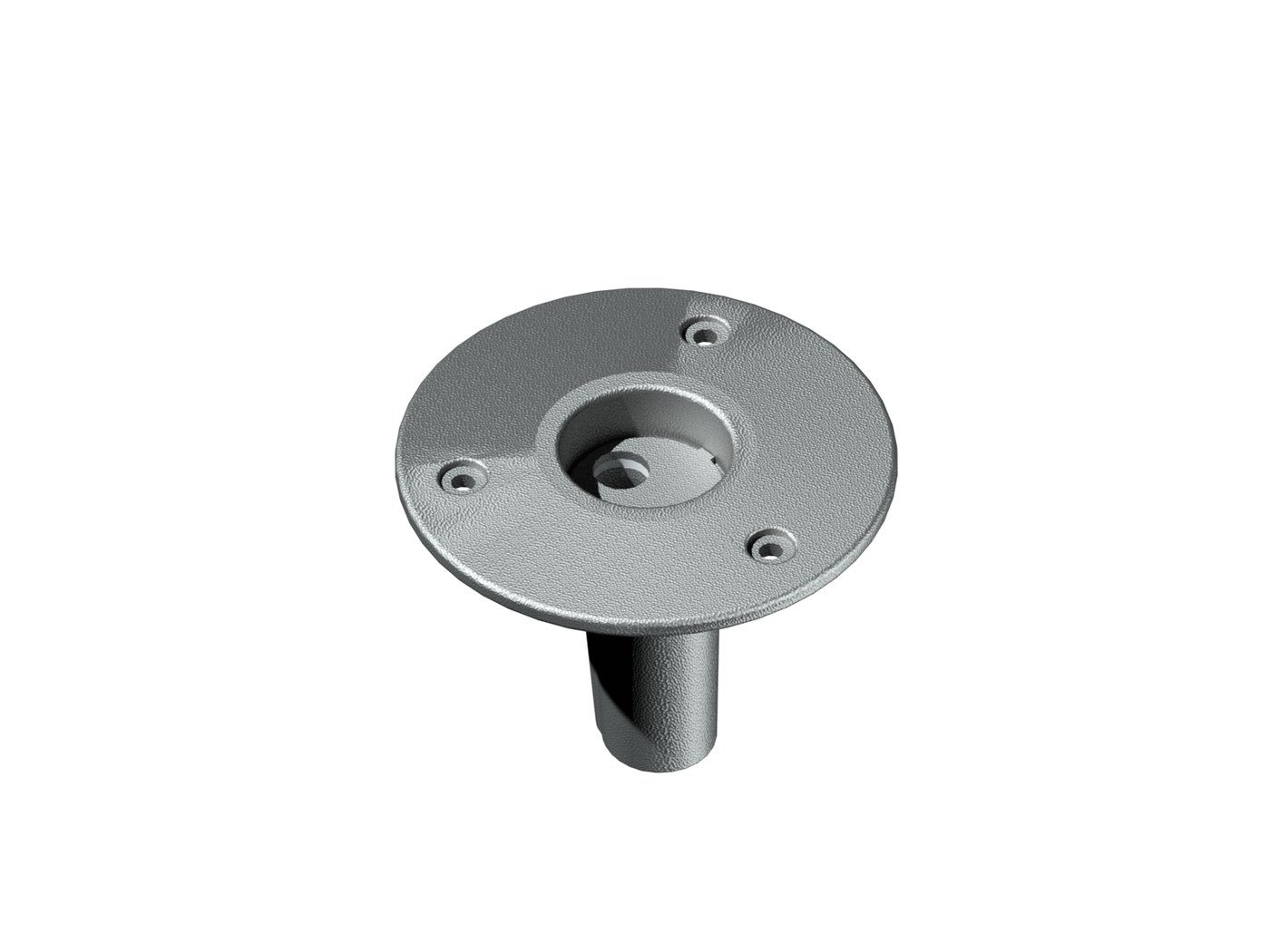
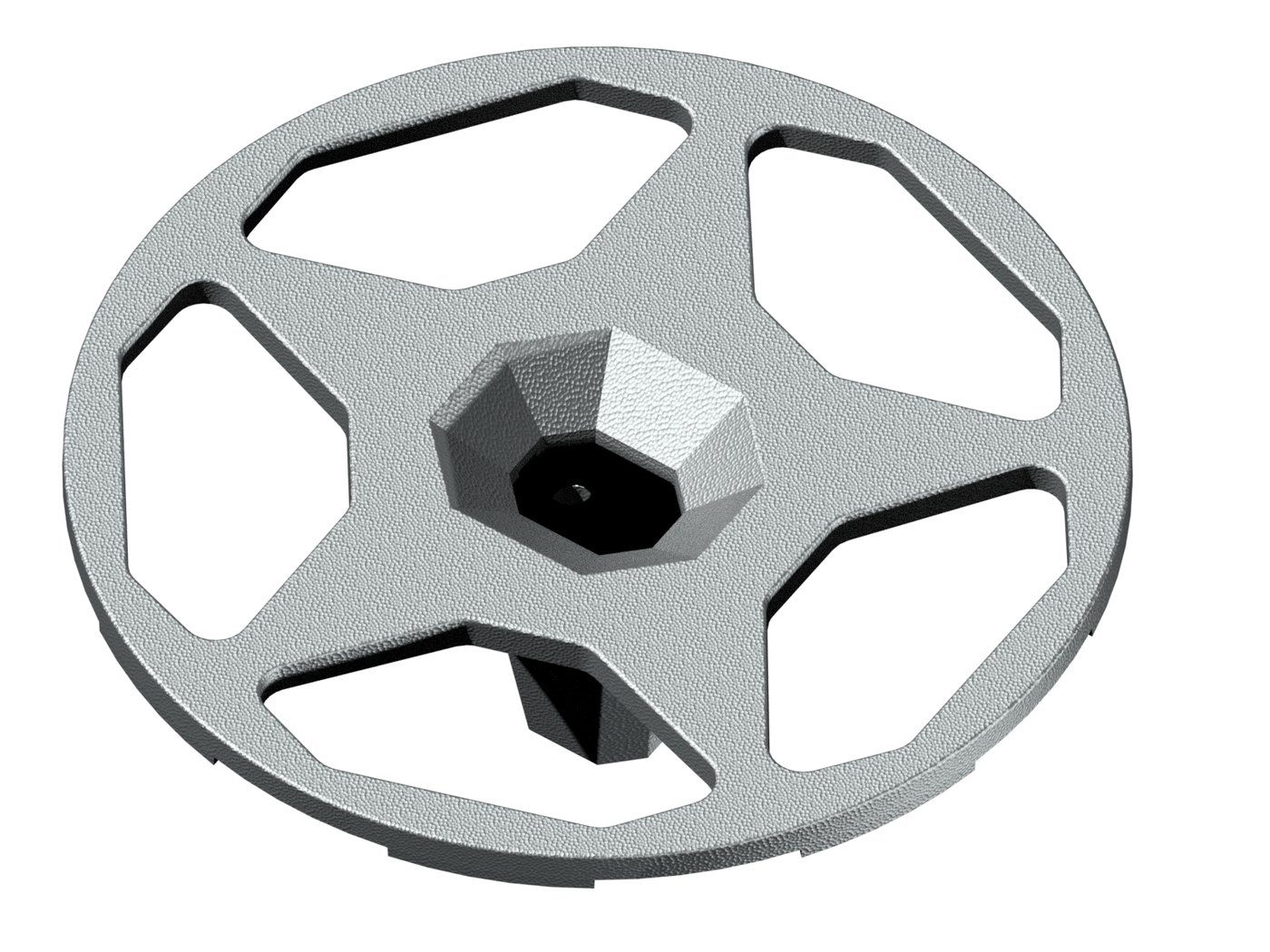
Top termination. The top termination grips the ground surface and fabric to secure it in place. The size of the load-bearing cap affects the ability to hold the soil matrix. Openings in the termination aid in the establishment of vegetation, obscuring and protecting the hardware.
Tendon. The tendon connects the anchor and the top termination. Constructed of high-strength, corrosion-resistant galvanized (zinc-aluminum coated) steel or stainless steel, the tendon is a critical piece for long-term performance. The tendon is typically fixed at the anchor side by crimping.
Grip. The grip is housed in the top termination and secures the tendon in the top termination. A release mechanism can allow for re-setting the assembly, as required. Each of these components can be varied to provide performance and economy options.
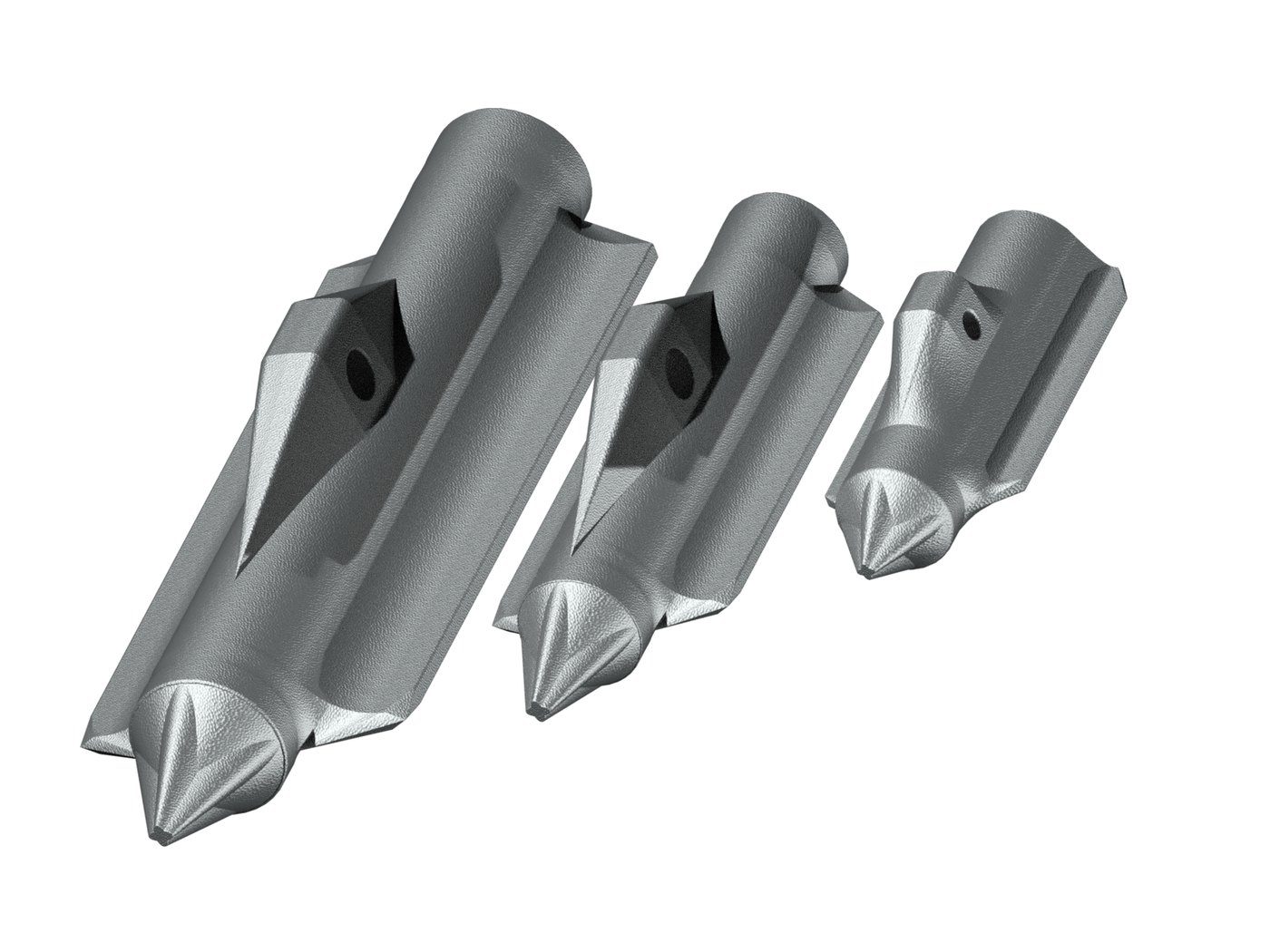
Variants, applications, and performance. Anchors are available in three sizes. As the size of the anchor increases, working load and ultimate resistance increase: F80, F120, and F170. Falcon Anchors are also available with multiple top termination configurations and cable types.
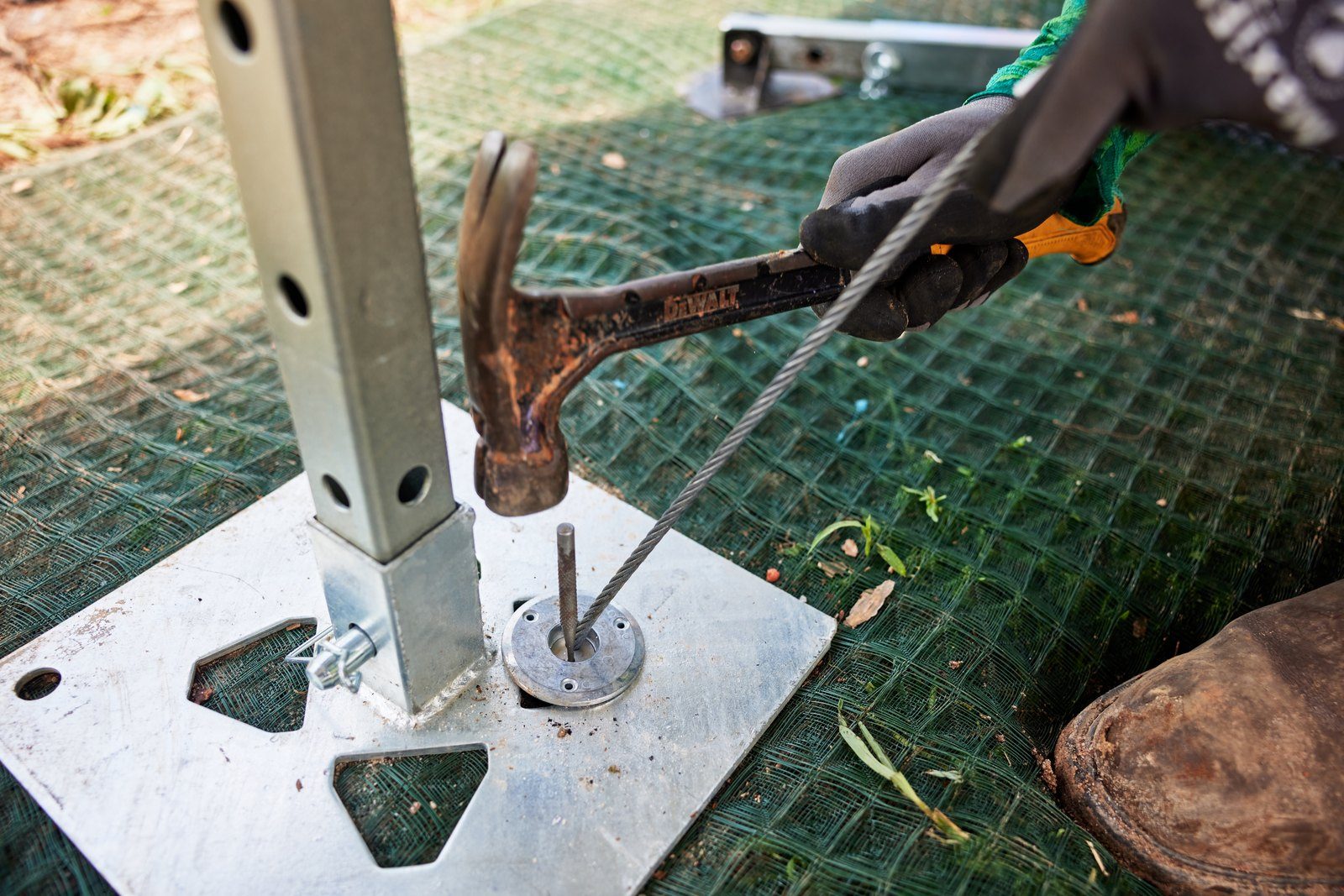
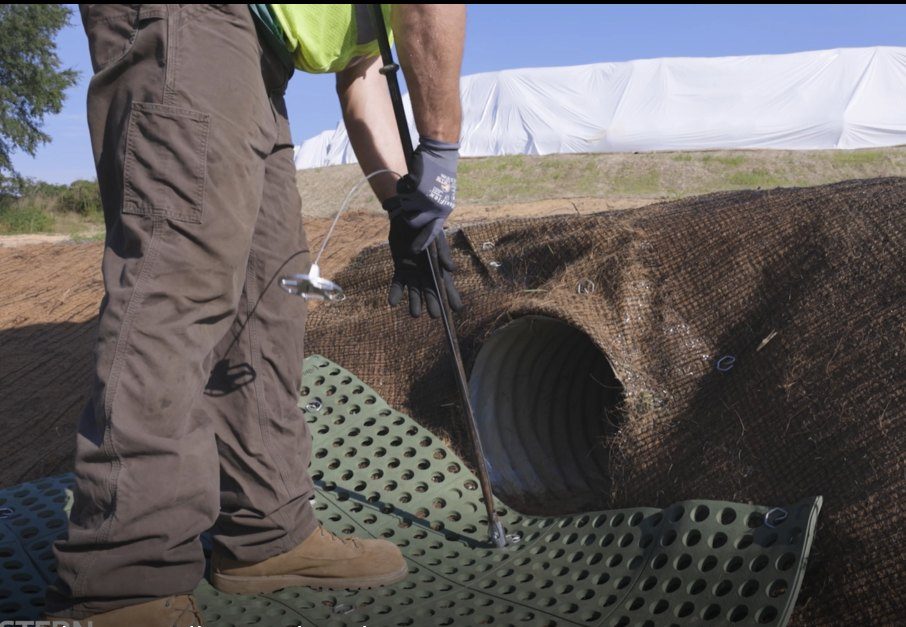
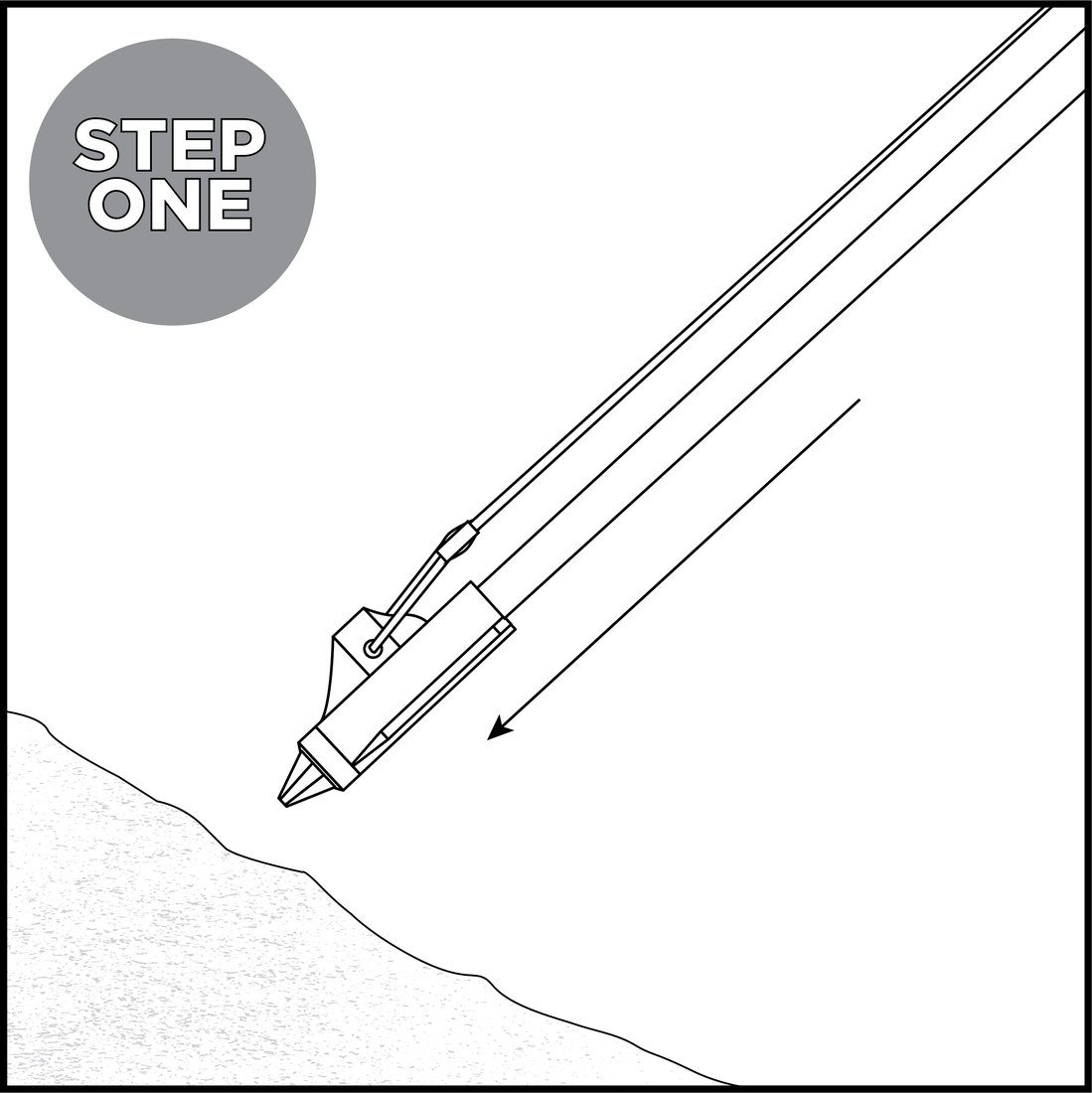
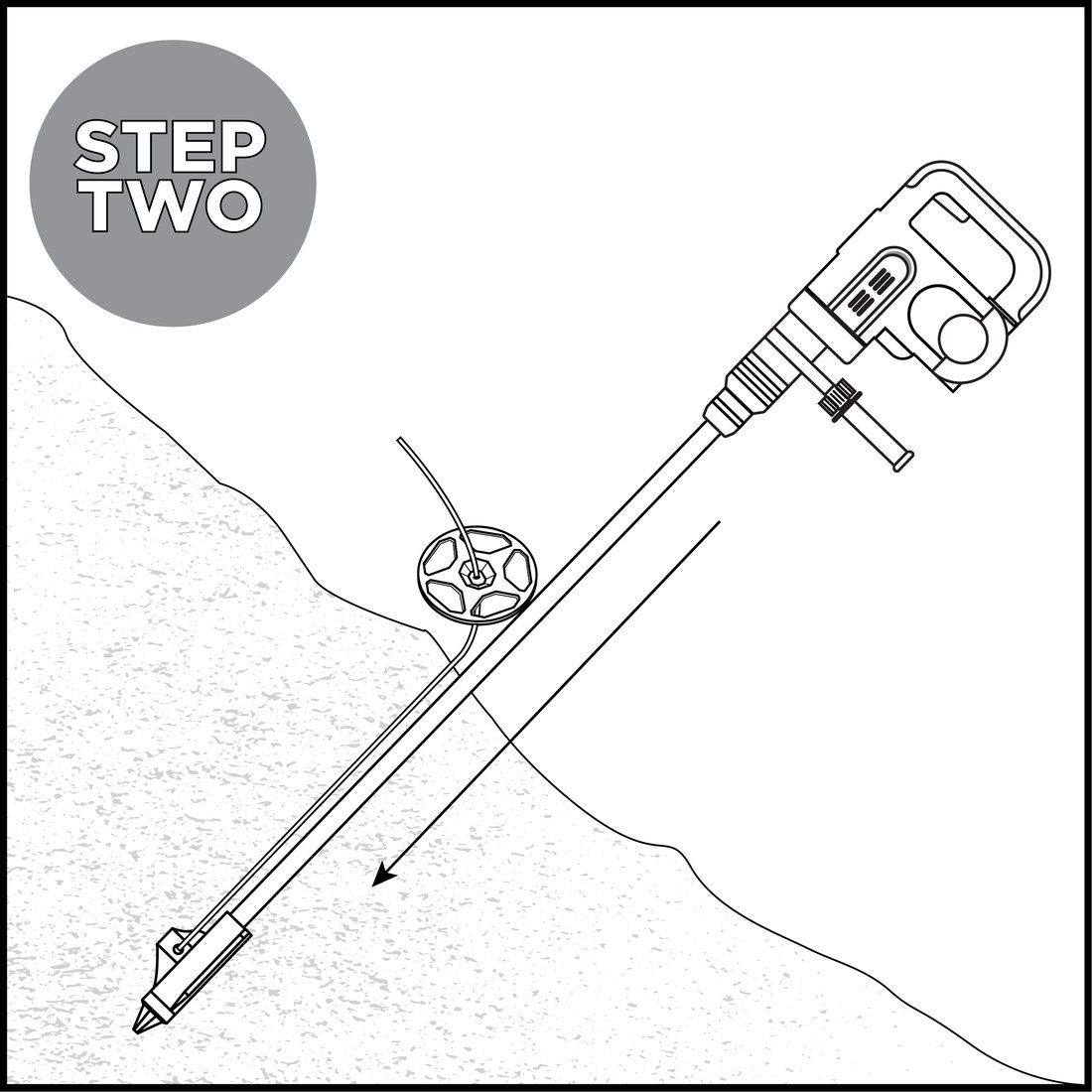
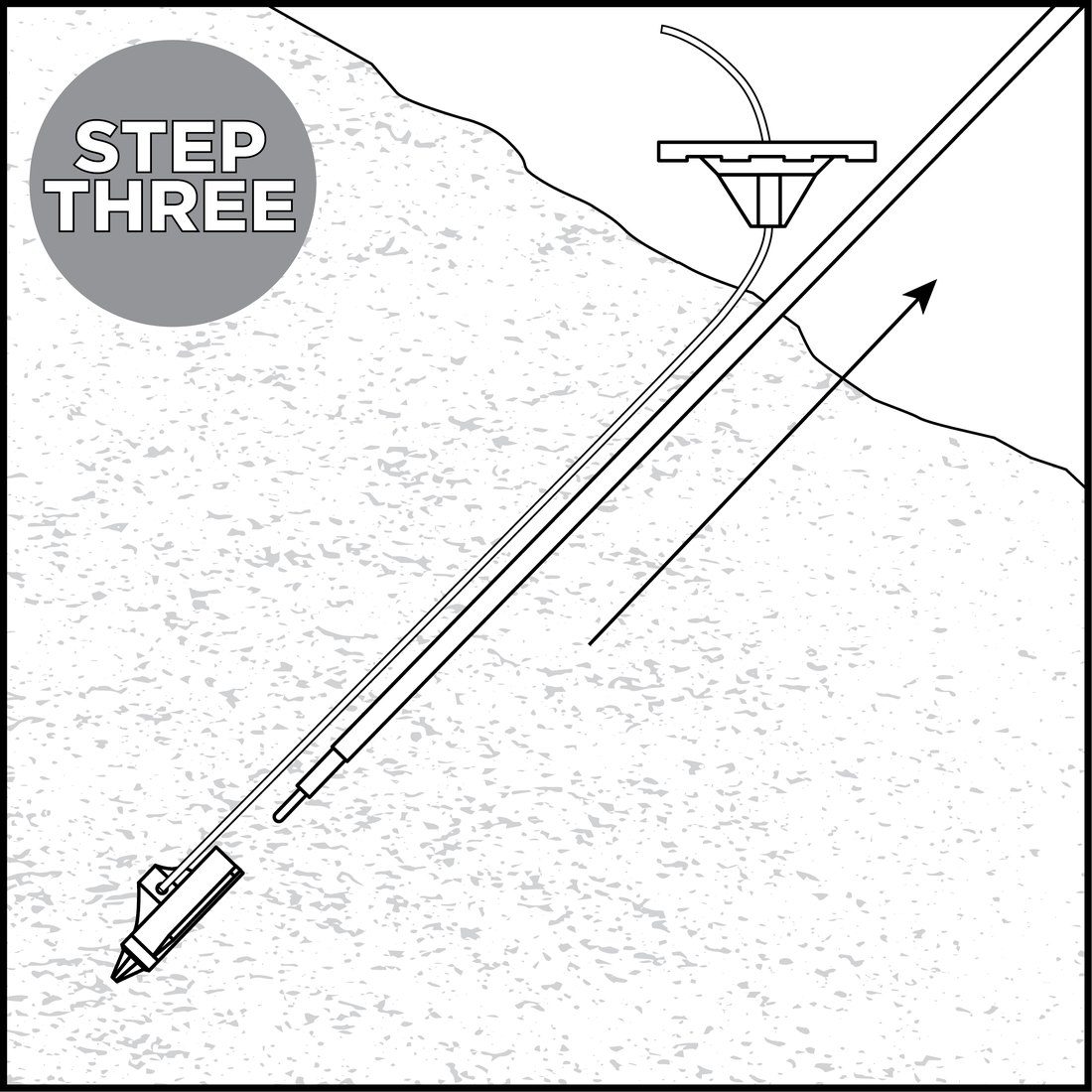
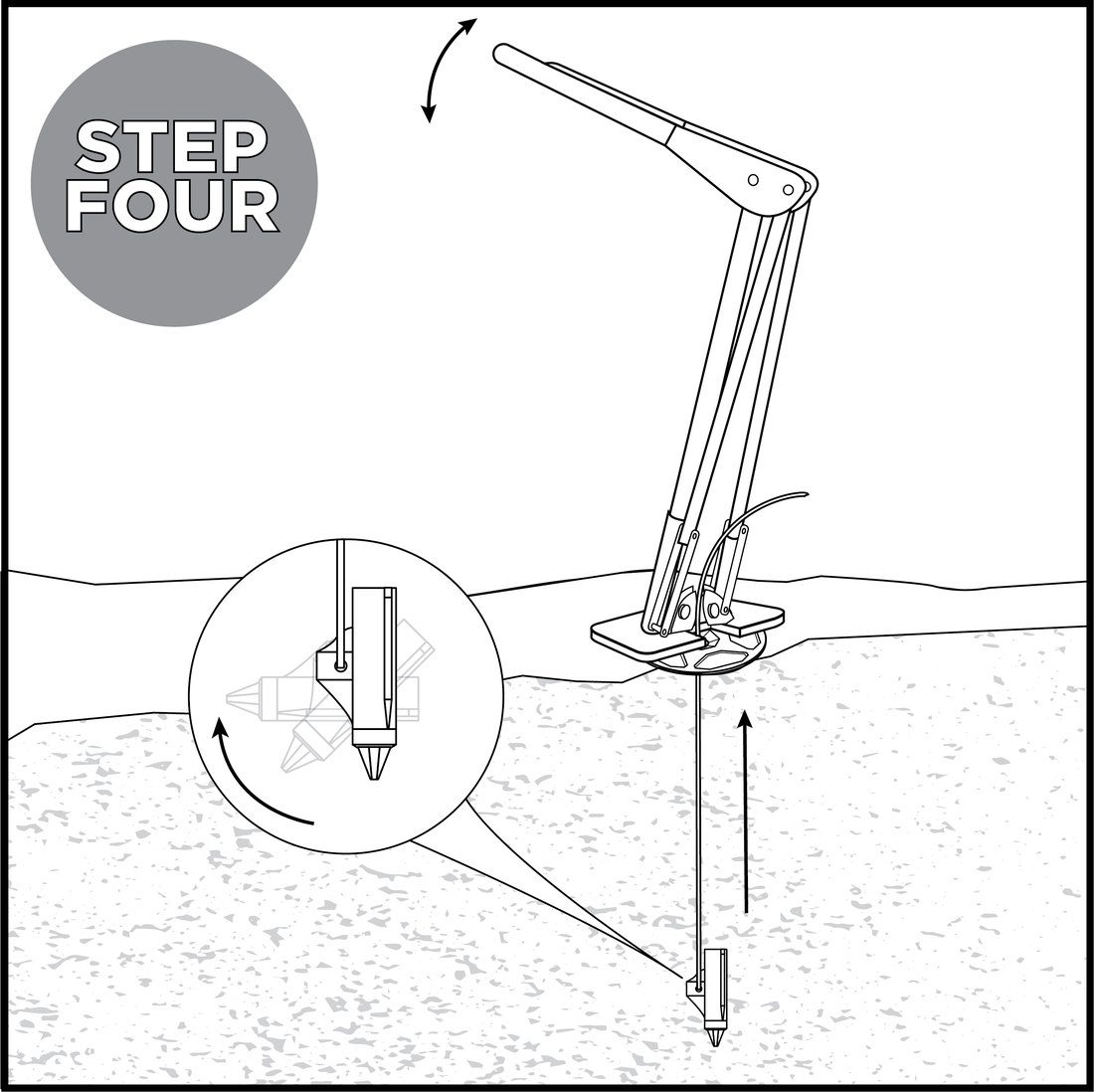
Loading and installation. PDAs are driven into the ground, typically a minimum of three feet. Once the tendon is retracted approximately three to six inches, the anchor rotates into a load-locked position, developing the pullout resistance for the assembly. When the anchor is rotated, the geometry of the anchor creates friction in the form of a frustrum cone. The anchor can resist pullout to the limit of the friction provided by the soil mass surrounding the assembly.
Frequently asked questions
What is a percussion-driven anchor and how does it work?
A percussion-driven anchor (PDA) is a driven earth anchor system. Using a drive rod and a handheld pneumatic or hydraulic hammer, the anchor is driven into the ground to a specified depth. Once at depth, the drive rod is removed and an upward load is applied to the tendon. This locks the anchor into undisturbed soil by rotating the anchor head perpendicular, providing immediate high-capacity holding strength.
How is the holding capacity of a PDA determined?
Capacity is determined by a combination of the soil’s shear strength and the depth of installation. We offer various anchor head sizes and cable lengths to match project load requirements, and recommend on-site pull tests to verify performance in local soil conditions.
Can these anchors be used in saturated or underwater conditions?
Yes. Falcon PDAs are highly effective in saturated slopes and near-shore applications. Because they derive strength from deep, undisturbed soil strata rather than surface tension, they perform well where other anchoring methods lose stability due to moisture.
Is specialized equipment required for installation?
Installation is straightforward. You typically need only a standard driving tool, such as an SDS-Max hammer drill or hydraulic breaker, and a drive rod. Because the system is compact, it is well suited to difficult, steep, or remote areas.
Are Falcon PDAs permanent or temporary?
They can be both. For permanent applications like slope stabilization, they provide long-term reinforcement. For temporary applications, such as securing equipment or short-term erosion control, they can be designed for removal or simply cut flush with the ground surface at the end of the project lifecycle.